
Education
MH-SET on Sunday, 25 October: Paper I at 10 am, reach your centre an hour early; admit card, ID and OMR rules explained
Published:
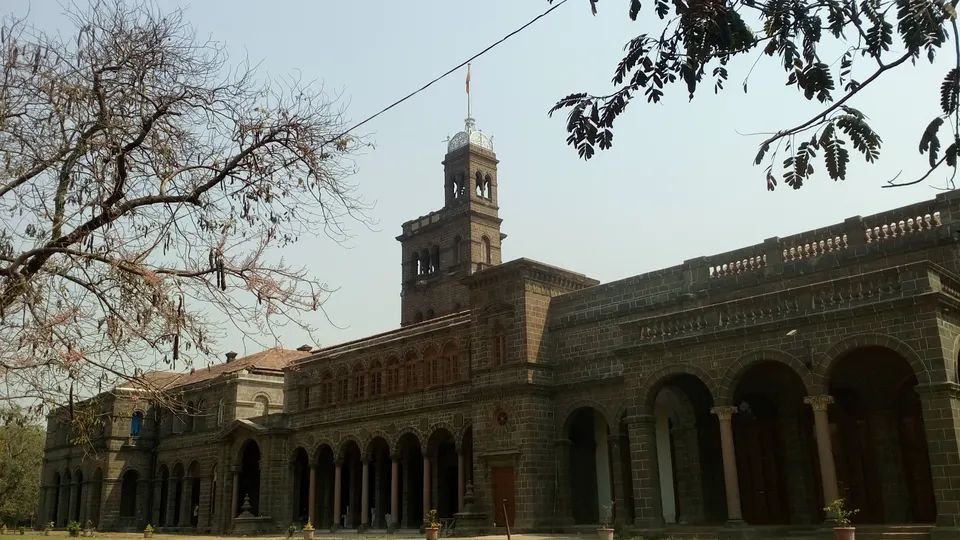
The 41st Maharashtra State Eligibility Test (MH-SET) takes place on Sunday, 25 October 2026, in 18 cities across Maharashtra and Goa. The SET department of Savitribai Phule Pune University (SPPU) conducts it. Paper I begins at 10 am and the exam halls open an hour before that. Nobody will be let in once the exam has started, so plan to be at your centre by about 9 am.
The test decides who is eligible to be appointed assistant professor in universities and colleges. In a notice dated 21 October, the SET department said all preparations were complete and asked candidates to download their admit cards only from the official website. It also asked them to ignore rumours and unofficial information and to rely only on instructions posted on the site.
The exam at a glance
- Date: Sunday, 25 October 2026
- Paper I: 10 to 11 am (50 questions of 2 marks each, 100 marks), on teaching and research aptitude, reasoning, comprehension and general awareness
- Paper II: 11.30 am to 1.30 pm (100 questions on the chosen subject, 2 marks each, 200 marks)
- Exam hall: opens 60 minutes before the exam starts
- Format: multiple-choice questions answered on an OMR sheet; no marks are deducted for wrong answers
- Medium: English and Marathi, except for language papers; where the two differ, the English version is final
- Subjects: 32 in all; each candidate sits only for the one subject printed on the admit card
- Candidates: 1,17,768 names on the official list of those who paid the fee
Skipping Paper I rules a candidate out of Paper II. The instructions say there is no separate break between the two sessions and washroom visits are not allowed during the final 20 minutes of either session. Under the information bulletin, candidates cannot leave the hall before 1.30 pm. Mathematical Science has 180 questions in three sections; candidates answer 100, taken either from Sections I and II or from Sections I and III. A sheet that attempts both Section II and Section III will be rejected.
The 18 exam cities
Mumbai, Pune, Kolhapur, Nashik, Jalgaon, Chhatrapati Sambhajinagar, Nanded, Amravati, Nagpur, Goa (Panaji), Solapur, Chandrapur, Gadchiroli, Ahilyanagar, Dhule, Ratnagiri, Parbhani and Nandurbar. Your exact centre and seat number are on the admit card. For help, the website lists a contact person for each city on its 'Contact Persons' page.
How to get your admit card
Admit cards went live on setexam.unipune.ac.in at 10 am on 15 October 2026. They are not sent by post.
- Open setexam.unipune.ac.in. The home page has three admit card links for the 25 October exam: by login, by candidate name and by application number.
- For the login route, your username is the email address you registered with. Enter it with your password and the captcha; both username and password are case-sensitive.
- The name and application-number links first show the instructions for candidates. Read and accept them, then fill in the details asked for.
- Check the name, photo, subject, seat number and centre address on the card, then print clear copies.
- If you have forgotten your password, use the 'Forgot Password?' option on the login page.
What to carry
- A printout of the admit card. Without it you cannot sit the exam.
- One original photo ID such as an Aadhaar card, PAN card or voter ID. The name on it must match the name on the admit card.
- Blue or black ballpoint pens, more than one. Candidates must bring their own stationery.
- Candidates with a disability of 40% or above: the disability certificate, and if bringing their own scribe, the undertaking in Annexure II of the bulletin.
What not to carry
- Mobile phones, pagers or any electronic device
- Calculators and log tables
- No smoking, tobacco, tea or food inside the exam hall
- Copying questions from the booklet onto the admit card or any other paper counts as unfair means
According to the department's instructions, a candidate caught copying or using other unfair means will be barred from the next SET.
OMR sheet rules
- The OMR sheet comes sealed inside the test booklet. Do not break the seal before 10 am for Paper I or before 11.30 am for Paper II.
- First check that the booklet code (A, B, C or D) on the test booklet matches the one on the OMR sheet. If it does not, ask the invigilator for another sheet.
- Write your seat number and subject code and darken their circles fully. If these are wrong or left blank, the sheet won't be marked and that paper scores zero.
- Fill answer circles completely, with a blue or black ballpoint pen only. A sheet marked in pencil will be rejected.
- An answer once marked cannot be changed. Erasers, whitener and correction fluid are not allowed, and marking more than one circle for a question does not count.
- Do not fold or tear the sheet. Writing your mobile number or anything that identifies you on it is treated as unfair means. Do rough work in the test booklet.
- Give the original OMR sheet back to the hall supervisor at the end of each session; failing to do so means zero for that paper. You may take home the test booklet and the carbonless copy of the OMR sheet.
- Put your signature on the attendance register at both sessions; an unsigned entry means the answer sheet goes unchecked.
Answer key and result
The department has not yet announced dates for this exam's answer key or result. Under the information bulletin, a provisional answer key, along with the question paper each candidate answered, will appear on the website after the exam and stay up for about two or three days; the exact dates will be announced after the exam. Challenging an answer costs Rs 200 per question, paid online and not refundable. Subject experts will review the challenges, a final key will follow and the result will be prepared from it. There is no re-evaluation after the result and no marksheet; marks are shown on the website.
Why the date changed three times
The exam was first announced for 26 July. In July the department named 6 September as a likely date, but because the Central Teacher Eligibility Test (CTET) was on the same day, a notice of 20 July moved it to 27 September. A corrigendum dated 13 September then moved it to 25 October, citing clashes with the schedules of UPSC and other competitive exams, and the travel difficulties candidates could face around Anant Chaturdashi on 25 September.
Before Sunday
- Download the admit card today, print two copies and keep a copy on your phone too (the phone itself must stay outside the centre).
- Make sure the name on the admit card matches your photo ID.
- Find the centre on a map and, if you can, visit it on Saturday to time the journey. It is the week before Diwali, so buses and trains may be crowded.
- The night before, put two or three blue or black ballpoint pens, the admit card and your ID in a clear pouch.
- Reach the centre by 9 am, and don't assume there will be a place to leave your phone or bag.
- Candidates with disabilities should carry the certificates needed for a scribe or extra time. Paper I gets 20 extra minutes and Paper II 40.
- For problems, contact the SET department on 020-25622446 or at set_coordinator@unipune.ac.in. For instructions, use only setexam.unipune.ac.in.
The department has said candidates will not be paid any travel or other allowance (TA/DA) for attending the exam.
Sources: SET department, Savitribai Phule Pune University: important dates; SET department: instructions for the 25 October exam (admit card page); SET department: notice to candidates, 21 October 2026 (PDF, Marathi); SET department: corrigendum notification, 13 September 2026 (PDF, Marathi); SET department: list of candidates who paid the fee (PDF); SET department: exam centres; SET department: scheme of examination; SET department: information bulletin (PDF); Free Press Journal; Pudhari
Stay with My Maha Rashtra
Related stories
- No exam fee for college students from Maharashtra's 304 drought-hit talukas: what the government resolution says, how refunds work and where each university stands
- Maharashtra SSC, HSC exams 2027: Class 12 from 8 February, Class 10 from 15 February; regular-fee exam form window closes on 31 October
- Summer vacation 2027: ‘3 May to 14 June’ is Pune district’s schedule, not the state’s; second-term and holiday dates by district
- MBBS students stuck in first year get a fifth chance: one extra attempt for batches from 2019-20, the conditions and what to do next
- CA Intermediate result: Nashik's Chandak Sakshi and Mumbai's Neel Rajesh Shah share all-India first rank with 502 out of 600
- School Diwali holidays 2026: no single date for Maharashtra; 5 to 18 November in Pune and Sangli, 5 to 24 November in Latur; district-by-district list
https://mymaharashtra.in/en/shikshan/mh-set-2026-october-25-admit-card-timings-centres-rules-10414