
Agriculture
Finish crop-cutting tests on time so compensation is paid before Diwali, central team tells Beed officials
Crops on 7.42 lakh hectares are affected; soybean yield has fallen from 1,534 kg to 410 kg a hectare, and dams hold 14.61% of capacity
My Maha Rashtra News Desk, Beed
Published:
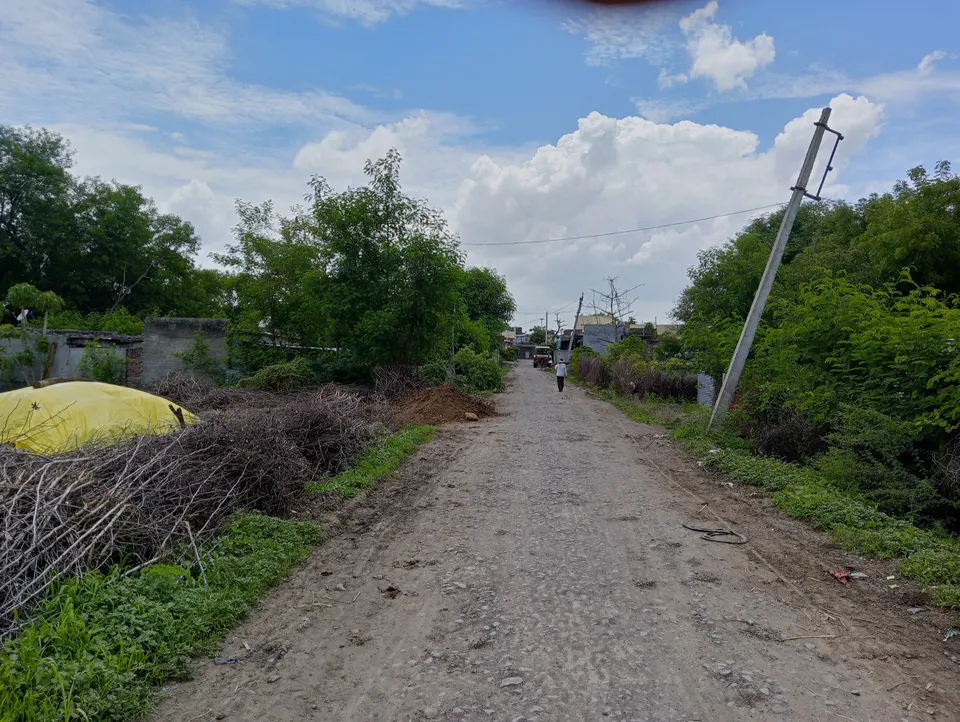
Beed: Crop-cutting experiments must be completed on time and losses recorded accurately so that drought-hit farmers are compensated before Diwali, and the pending soybean experiments must be finished before the festival, said Muktanand Agrawal, head of the central team and joint secretary in the Union department of agriculture and farmers welfare. On Saturday, October 10, the second day of its tour, the team visited 15 places in the district before holding a review meeting at the collectorate.
According to collector Vivek Johnson's presentation, kharif crops were sown on 7,87,218 hectares in the district, of which 7,42,163 hectares have been affected, hitting about 8.22 lakh farmers in 1,353 villages. The district received 356 mm of rain between June and September, or 62.89 per cent of the average; in August it got just 18.4 per cent of its normal rain.
Preliminary crop-cutting data show soybean yield down to 410 kg a hectare this season from a five-year average of 1,534 kg. By October 8, 957 of the 3,132 planned experiments had been completed, including 310 of 576 for soybean, while those for cotton and tur were still pending. The district's 164 irrigation projects hold only 14.61 per cent of usable capacity, and groundwater levels had fallen by an average of 4.55 metres according to September readings.
Agrawal asked officials to prepare an objective report on the severity of the drought by checking ground conditions, rainfall and technical indices, and to plan for drinking water, fodder and jobs. During the field visits, the team was told that farmers at Morgaon in Beed taluka expect barely 50 kg of soybean an acre instead of seven to eight quintals, and that Vaidyakinhi and Sonegaon in Patoda taluka have had no rain for 65 days.
Sources: Mahasamvad; Mahasamvad
Stay with My Maha Rashtra
Related stories
- 100 check dams in six days, at zero cost: Nashik farmers unite against drought
- Get RCB canal water to Wadegaon and Bhajepar farmers, MLA Vijay Rahangdale tells irrigation officials
- Sant Gopalbuva Maharaj sugar factory at Rameshwar starts crushing; cane price set at ₹3,151 to ₹3,351 a tonne
- Main pipeline work begins on Sulwade-Jamphal scheme to bring Tapi water to 54 villages in Shindkheda
- Nanded plans 7,784 quintals of certified seed for the rabi season, chiefly gram
- Tipper rams pickup on Kaij-Manjarsumba road; two brothers killed, five cattle dead
https://mymaharashtra.in/en/sheti/beed-central-team-review-compensation-before-diwali-10235