
Maharashtra
Over six lakh people in Ahilyanagar depend on hand pumps; 1,295 are dead and 1,056 unfit for drinking
Nearly twice as many people rely on hand pumps as on water tankers; 14 mobile squads repair pumps taluka by taluka
My Maha Rashtra News Desk, Ahilyanagar
Published:
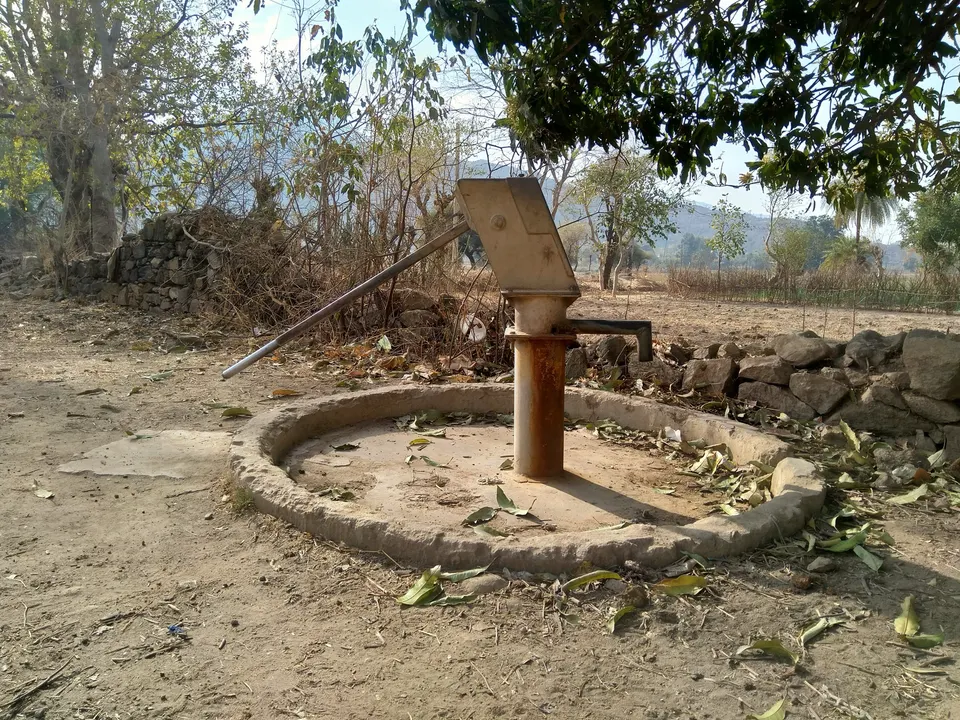
Ahilyanagar: With the groundwater level falling amid drought and rising heat, more than six lakh people in the district depend on hand pumps for drinking water. According to the zilla parishad's rural water supply mechanical wing, 6,585 of the district's 11,719 hand pumps are currently serving them.
Of the district's hand pumps, 7,641 belong to the zilla parishad and 2,714 to gram panchayats. Some 1,295 have stopped working for good, 6,042 run only eight months a year and just 42 yield water all year round, while water from 1,056 has been found unfit for drinking. Shrigonda taluka has the most hand pumps at 1,686, followed by Karjat with 1,255; Akole (423) and Rahuri (562) have the fewest.
Tankers currently supply 3.31 lakh people in 161 villages and 961 hamlets, using 169 vehicles, which means nearly twice as many people rely on hand pumps as on tankers. Together, tankers and hand pumps are keeping about ten lakh people supplied. Hand pumps have not yet begun failing in large numbers because of the falling water table, but officials fear they could start to from next month.
The zilla parishad has deployed 14 mobile repair squads, one for each taluka, with 36 staff in all. A squad goes out once a complaint is registered with the block development officer, and each repairs two or three pumps a day. From its own cess funds, the zilla parishad has set aside ₹1.10 crore for staff salaries, ₹20 lakh for spare parts and ₹15 lakh for fuel.
Legislators have not funded hand pumps since 2017-18, and none have been proposed in scarcity plans since 2019, though gram panchayats receive 15th Finance Commission money for them. Government borewells are 70 to 80 feet deep, while private ones go far deeper, so government pumps dry up quickly. New borewells will be taken up wherever gram panchayats ask for them, and the measure is being written into the scarcity plan that will go to the collector for approval, said deputy engineer Nikhil Patare of the mechanical wing.
Source: Loksatta
Stay with My Maha Rashtra
Related stories
- Diwali 2026 in Maharashtra: Vasubaras on 5 November, Lakshmi Pujan on the 8th and Bhaubeej on the 11th; the full calendar and muhurat
- Dasara weather: clear skies and 36°C in Mumbai; showers likely in Kolhapur and Sindhudurg
- Dasara 2026: What time is the Vijay muhurat in your city? Timings for 7 Maharashtra cities, and fresh Marathi wishes
- Over 2,000 police deployed in Amravati for Navratri; goddess installed at 2,583 mandals in the district
- Abhijeet Dipke misses grandmother's funeral; parents say Delhi Police did not release him in time
- Ghatasthapana at Tuljapur to chants of 'Aai Raja Udo Udo' as Tulja Bhavani's Navratri begins
https://mymaharashtra.in/en/maharashtra/ahilyanagar-hand-pumps-six-lakh-people-drought-10325